
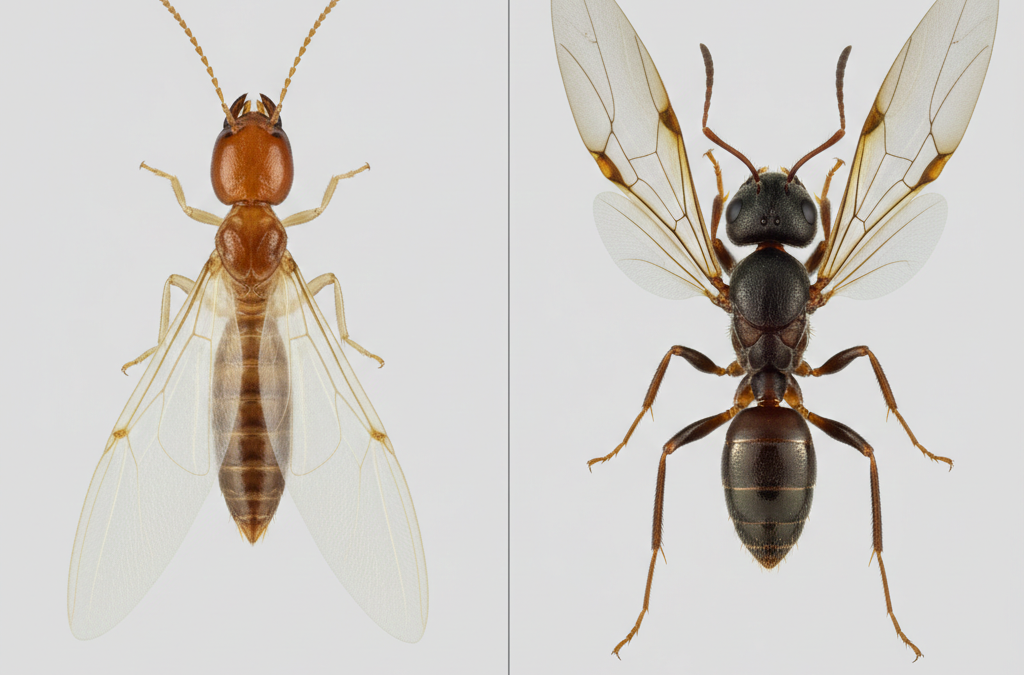
A Complete Guide for Mt. Juliet and Nashville Homeowners
Every spring in Mt. Juliet and Nashville, Tennessee, homeowners open their doors to warmer weather—only to discover swarms of winged insects emerging from the ground, crawling near windows, or gathering around porch lights. The immediate question is always the same: are those flying ants or termite swarmers?
The answer matters more than you might think. While flying ants are mostly a nuisance, termite swarmers are a warning sign that a mature colony—potentially containing 50,000 to 2 million members—is actively living in or near your home. Termites cause an estimated $5 billion in property damage across the United States every year, and homes right here in Wilson County and the greater Nashville area are not immune.
At Armor Termite and Pest Control, we receive dozens of calls each spring from concerned homeowners who have found piles of discarded wings on their windowsills or swarms of insects near their foundation. Many of these homeowners have been watching the wrong pest, mistaking harmless flying ants for destructive termite alates or worse, dismissing actual termite swarmers as nothing to worry about.
This guide will teach you exactly how to tell the difference between ant swarmers and termite swarmers, what each type of swarm means for your property, what swarming seasons look like in Middle Tennessee, and what steps to take the moment you spot winged insects in or around your home.
What Is Swarming and Why Does It Happen?
Swarming is the reproductive event for both ants and termites. When a colony reaches maturity, it produces a special caste of winged reproductive insects known as alates or swarmers. These winged adults leave the established colony in large numbers, fly a short distance, pair off with a mate, shed their wings, and attempt to establish brand-new colonies.
For termites, swarmers typically emerge from colonies that are at least three years old. The swarm is triggered by a combination of warmer temperatures and rainfall—conditions that are common in Middle Tennessee from March through June. In heated structures, swarming can actually occur at other times of the year as well.
For ants, the swarming process is similar in purpose but can happen across a broader timeframe depending on the species. Carpenter ants, fire ants, and odorous house ants—the most common species in the Mt. Juliet area—all produce winged reproductive ants that swarm during warm, humid conditions.
The critical point for homeowners: both ant and termite swarms tend to occur at the same time of year, often on the same warm days after a spring rain. This overlap is exactly why so many people confuse the two.
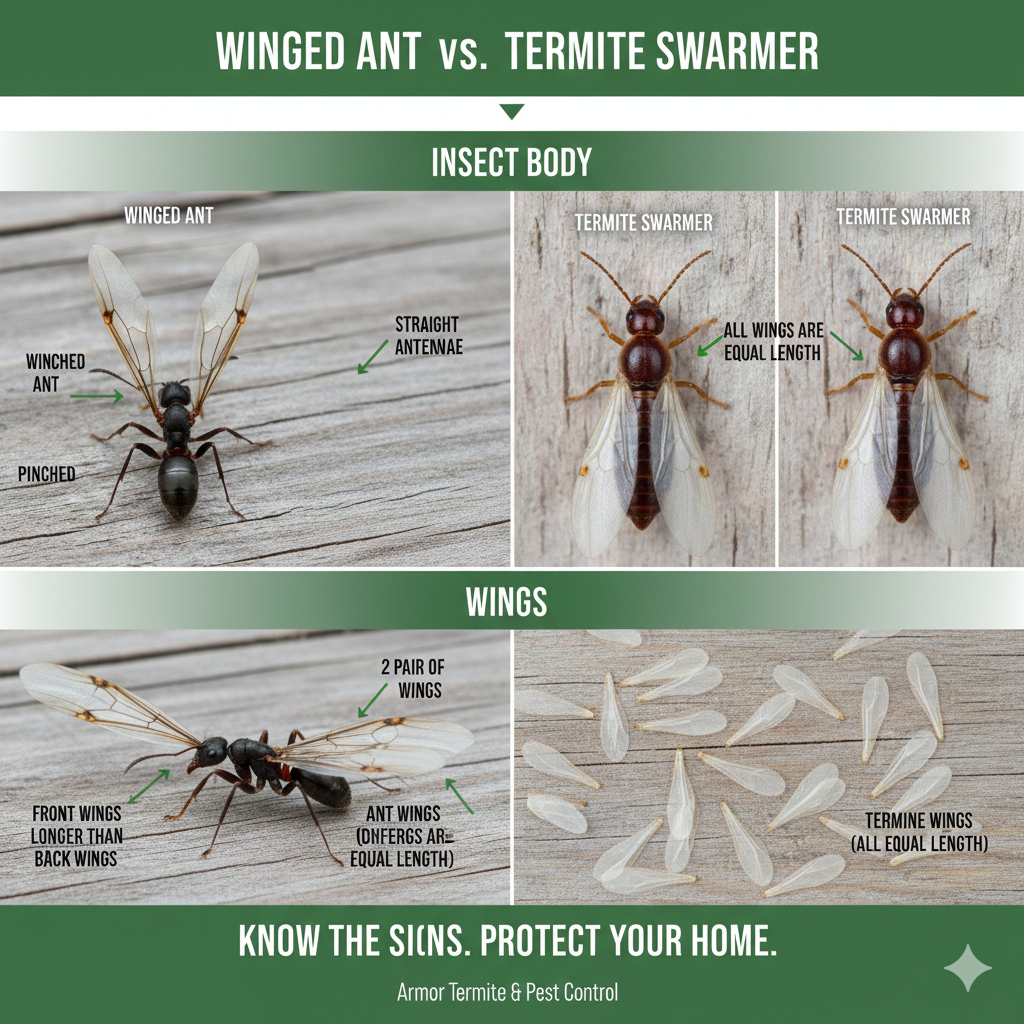
How to Tell Ant Swarmers from Termite Swarmers: A Side by Side Guide
Although ant swarmers and termite swarmers may appear similar at a glance—especially when you find a pile of wings or a cluster of small, dark insects—the physical differences between them are actually quite distinct once you know what to look for. Here are the four most reliable identification features:
Body Shape: The Waist Test
Termite swarmers have a broad, straight-sided body with no visible narrowing between the thorax and abdomen. Their profile is relatively uniform from head to tail, giving them a thick, cigar-like shape.
Ant swarmers have a very distinct, pinched or constricted waist between the thorax and abdomen—similar to a wasp. This narrow waist is one of the easiest and most reliable ways to distinguish the two insects.
Antennae: Straight vs. Elbowed
Termite swarmers have straight, bead-like antennae that extend forward from the head without any noticeable bend or curve.
Ant swarmers have distinctly elbowed or bent antennae with a sharp angle near the middle. This L-shaped antenna is unique to ants and easy to spot with even a basic magnifying glass.
Wings: Equal vs. Unequal
Termite swarmers have four wings that are all the same size and shape. The wings are cloudy white, roughly twice the length of the body, and break off easily after the mating flight. You will often find piles of identical, shed wings near window sills, light fixtures, or foundation walls.
Ant swarmers also have four wings, but the front pair is noticeably larger than the hind pair. Ant wings tend to be clearer and more transparent than termite wings, and they do not break off as easily.
Color and Size
Termite swarmers of the most common Tennessee species (Reticulitermes flavipes, the eastern subterranean termite) are generally dark brown to black. They range from about ¼-inch to ½-inch in length including their wings.
Ant swarmers vary in color depending on species. Carpenter ant swarmers are typically black and may be larger than termite swarmers. Fire ant swarmers are reddish-brown and smaller. Odorous house ant swarmers are small and dark brown.
Quick-Reference Identification Table
| Feature | Termite Swarmer | Ant Swarmer |
| Body Shape | Broad, straight waist – no constriction | Narrow, pinched waist – wasp-like |
| Antennae | Straight, bead-like | Elbowed (L-shaped bend) |
| Wings | Four equal-sized, cloudy white, twice body length | Front wings longer than hind wings, clearer |
| Wing Shedding | Wings break off easily – piles found near windows | Wings less likely to be shed in piles |
| Color | Dark brown to black (most TN species) | Varies: black, reddish-brown, or dark brown |
| Size | ¼” to ½” including wings | Varies by species (⅛” to ¾”) |
| Peak Season (TN) | March – June (varies by species) | Spring through fall (varies by species) |
| Damage Risk | HIGH – colony is destroying wood |
LOW to MODERATE – depends on species |
What Does a Swarm Mean for Your Property?
Termite Swarmers Found Indoors
Discovering winged termites inside your home is a strong indicator of an active termite infestation that warrants professional treatment. Because termite swarmers are drawn to light, they are frequently found near windows, sliding glass doors, and light fixtures. You may also find piles of discarded wings on window sills, countertops, or near baseboards.
The good news is that the swarmers themselves do not cause structural damage—they do not eat wood and only survive about a day after emerging. They can be removed with a broom or vacuum. The concern, however, is what the swarmers represent: a mature, established colony of wood-destroying worker termites that has been feeding on the structural wood of your home, potentially for years.
Bottom line: Indoor termite swarmers almost always indicate an infestation requiring professional treatment.
Termite Swarmers Found Outdoors
Swarms of termites emerging from tree stumps, woodpiles, mulch beds, or other outdoor locations do not automatically mean your house is infested. Termite colonies naturally exist in the soil and play an important ecological role in breaking down dead wood. However, if you see termite swarmers emerging near your foundation, from attached porches or patios, or from landscaping timbers adjacent to your home, the likelihood of a structural infestation increases significantly and a professional inspection is strongly recommended.
Ant Swarmers Found Indoors or Outdoors
Ant swarmers are generally less cause for alarm than termite swarmers, but certain species do require attention. Carpenter ant swarmers, for example, indicate a colony that excavates wood for nesting—while they don’t eat the wood like termites, they can still cause structural damage over time. Fire ant swarmers indicate expanding colonies in your yard that pose a stinging risk to your family and pets. Odorous house ant swarmers are primarily a nuisance pest but signal that colonies are established near or within your home.
Have Ants or Termites?
Beyond the Swarm: Other Signs of Termite Activity
- Mud Tubes:
- Hollow or Damaged Wood:
- Sawdust-Like Powder:
- Bubbling Wallpaper or Paint:
Q: I found wings on my windowsill but no insects. Should I be concerned?
Yes. Piles of shed wings—especially if they are all the same size—are a hallmark of a termite swarm. Termite swarmers shed their wings shortly after their mating flight, and the wings often accumulate on windowsills, near doors, and along baseboards. Contact a pest control professional promptly for an inspection.
Q: Can flying ants damage my home like termites?
Most flying ants do not cause structural damage. The exception is the carpenter ant, which excavates wood to build nesting galleries. While carpenter ants do not eat wood the way termites do, their tunneling can weaken structural components over time. The wood damage pattern is different carpenter ant galleries are smooth and clean, while termite galleries contain mud and soil.
Q: Do I need to treat my home if I see swarmers in my yard but not inside?
Outdoor swarms from tree stumps or woodpiles in the yard do not necessarily mean your home is infested. However, if the swarmers are emerging close to your foundation, from attached structures like porches or patios, or from landscaping timbers touching your home, a professional inspection is recommended.
Q: How quickly do I need to act if I see termite swarmers?
While the swarmers themselves are harmless and short-lived, they indicate a mature colony that has likely been feeding for several years. Prompt action is wise—schedule an inspection within a few days. There is no need for panic, but there is good reason not to delay.
Q: Can termite swarmers that emerge indoors start a new colony inside my house?
Mating flights that occur indoors are almost never successful at starting new colonies. The swarmers can be vacuumed up and discarded. However, their presence indoors does confirm that an existing colony has access to your home’s structure.
Learning Center
From Ants to Rodents: Pest Services in Lebanon
Shield your property with Armor Termite, the trusted brand for high-quality pest control solutions. Our expert team ensures a pest-free environment for your peace of mind.
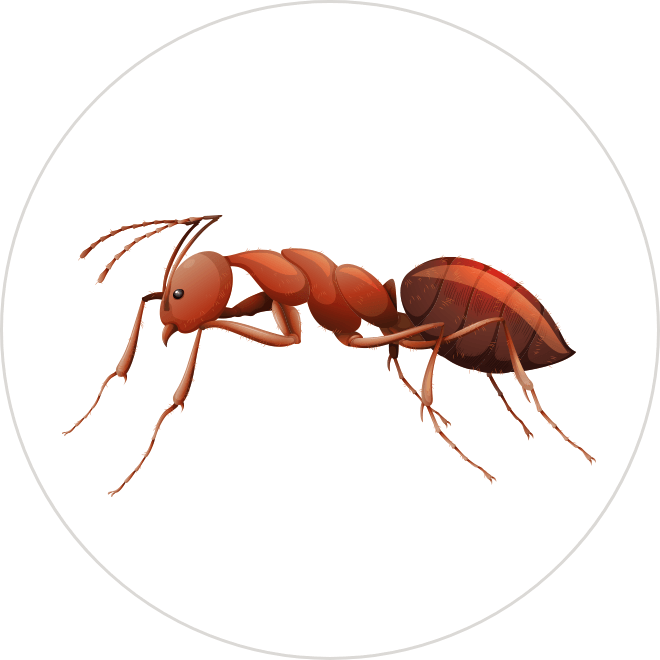
Ants
The number one nuisance pest in North America, ants make up the majority of local pest problems. Varying by species, the average colony is made up of anywhere between 300,000 to 500,000 ants. With the capability of surviving more than seven years, it’s no surprise that they are likely to take up residence in your home.
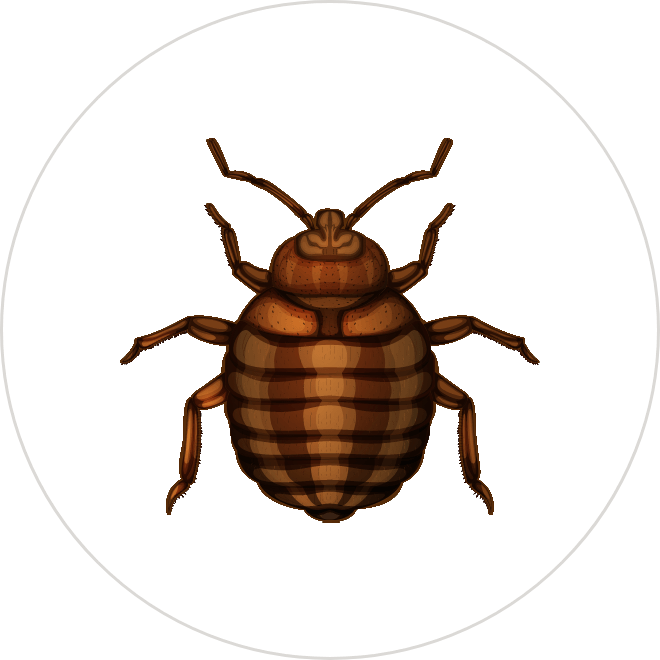
Bed Bugs
Our bed bug exterminators are thoroughly trained to inspect, detect, and eliminate bed bugs. By using Apprehend in your home, we can treat your entire infestation – from Nymph to adult. This innovative treatment reaches where pesticides can’t, all while keeping your family and belongings safe.

Carpenter Ants
Carpenter ants are a type of ant species known for their large size and their ability to nest in wood, often causing damage to wooden structures. Winged, dark in color, and residing in moist, damaged woods, it’s common that homeowners mistake carpenter ant swarms for termite colonies.
Carpenter Bees
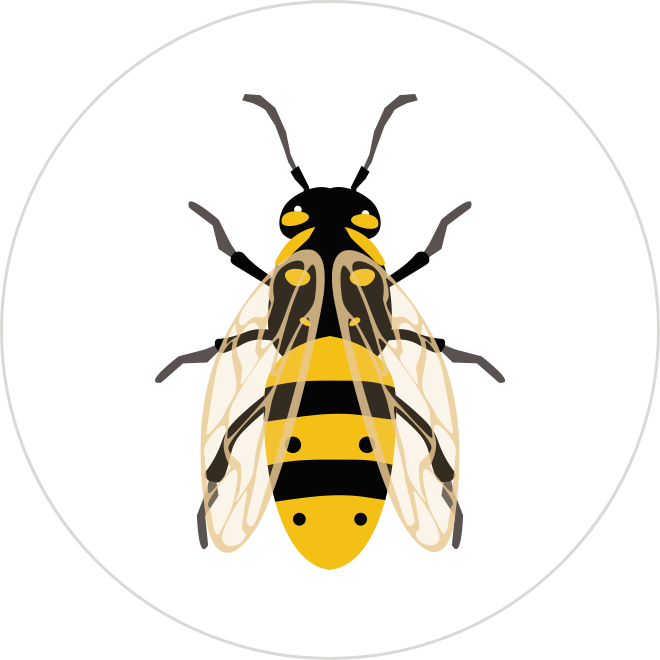
Often mistaken for bumble bees, carpenter bees are commonly found in Spring and early Summer, buzzing around eaves and around wooden porch railings. Getting their name from their habit of boring holes into wood to create nests for reproduction. Carpenter bees are known to cause substantial damage to untreated wood, especially if the insects go unchecked for long periods of time.
Cockroaches
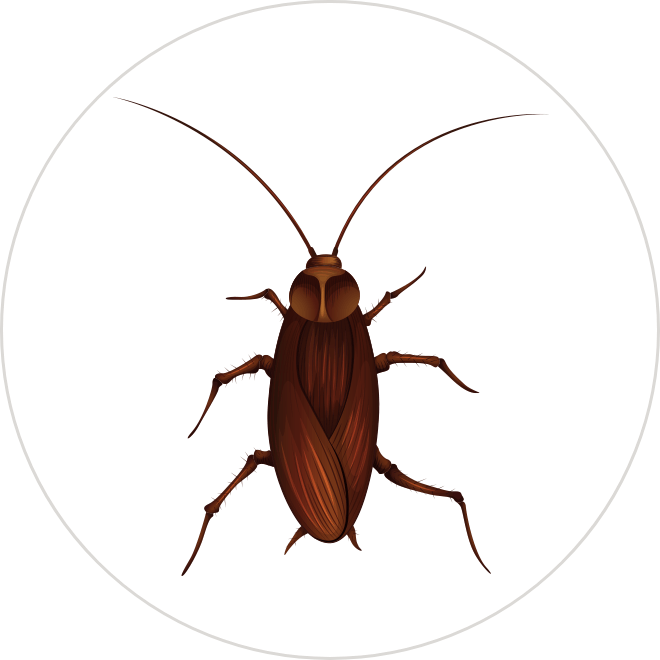
Mostly nocturnal, cockroaches like to seek shelter from the outdoors. Likely to gravitate in dark, warm locations, many homeowners notice that cockroaches inhabit their bathrooms, closets, and kitchens. Ranging in color from light brown to black, the type of cockroach has much to do with the location they are likely to be found.

Drain Flies
All three flies can be loosely grouped as “small flies attracted to decaying organic matter”. However, their specific appearances, breeding habits, and preferred environments differ significantly. Fruit Flies: Prefer overripe or fermenting fruits and vegetables. Phorid Flies: Breed in a wider range of decaying matter, including drains, sewage lines, and sometimes even decaying animal matter. Drain Flies: Specifically breed in the organic gunk found within drains
Mosquitoes
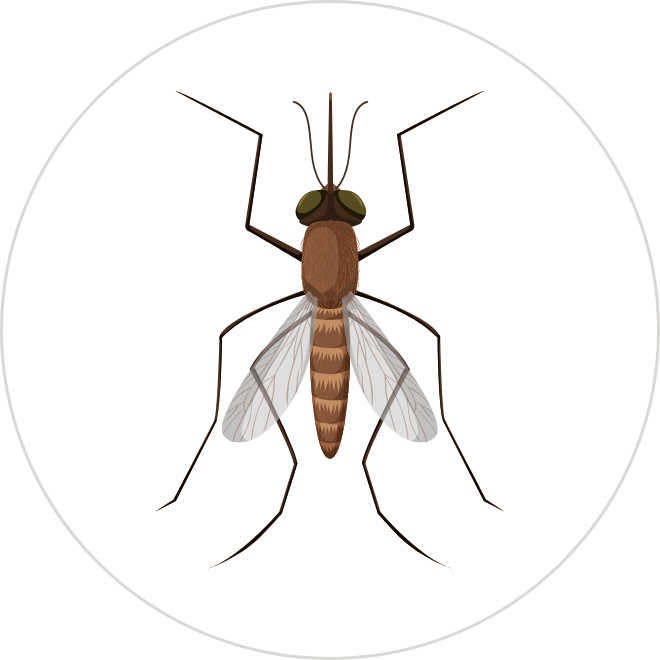
Not only are mosquitoes known for disrupting outdoor activities, but they are also vectors for dangerous diseases. Drawn to standing water and capable of laying up to 3,000 eggs in a lifetime, it’s no wonder that mosquitoes are one of the top nuisance pests in the US!

Rodents
Including mice and rats, rodents can present a number of threats to homeowners. Known to chew through wires, causing electrical fires, transmit diseases, and even track in ticks, it’s always a good idea to prevent these pests before a problem occurs. home or business pest-free.
Spiders
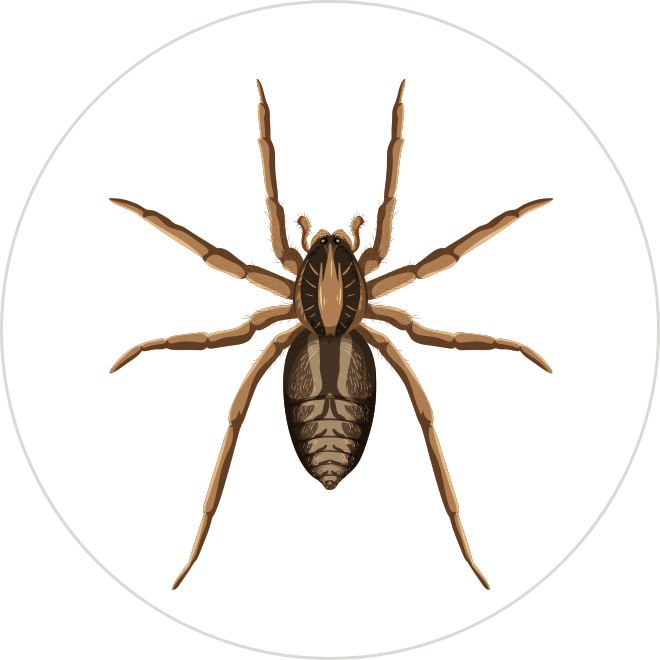
Contrary to popular belief, spiders are not insects; they are actually arachnids, closely related to ticks and scorpions. Possessing the signature trait of eight legs and known to leave behind webs, spiders are notorious for spooking many homeowners.
Stinging Insects
There are a number of stinging insects common to Tennessee, many of which pose a threat to your family’s well being. Insects like wasps and hornets can cause painful, sometimes life-threatening stings! It’s important to understand the behaviors and characteristics of these pests, so you can stay safe.

Termites
Causing more than $5 billion in damage to homes across the United States each year, termites are most common in the southern part of the nation. Since most homeowners’ insurance won’t cover termite damage, professional help and prevention methods are often recommended.